
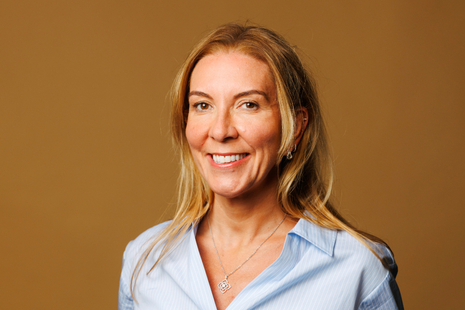
Dame Antonia Romeo, Cabinet Secretary and Head of the Home Civil Service – photo UK Government, OGL v3.0, via Wikimedia Commons
1. Rewiring the State and the Future Civil Service was the title of the Cabinet Secretary’s Annual Lecture that Dame Antonia Romeo gave at the London School of Economics last Tuesday. https://www.gov.uk/government/speeches/rewiring-the-state-and-the-future-civil-service Her lecture began as follows:
On my first day in the Civil Service, 26 years ago last month, I was shown to my office in the Lord Chancellor’s department. I was a ‘Grade 7’ at the time, in year-2000 terminology, which at that time entitled me to a whole office to myself. It even had a meeting table and six chairs, with arms. On my second day in the Civil Service, the facilities team came to apologise. They had mistaken my seniority, believing me to be the more senior ‘Grade 6’. By the time I left for the evening, those six chairs with arms had been replaced by four chairs, without arms, commensurate with my lower status. This story is not to criticise the Civil Service of the time. It encapsulates the era in which we operated: Rigorous discipline and transparent traditions meant everyone knew precisely where they stood, down to the office furniture. But also the rigidity of the bureaucracy, and the attention to hierarchy and process. (…) No one is prouder of the Civil Service than I am. But few are more determined that it needs to change. (…) There is a confluence of five imperatives which I believe together present the burning platform for change: the advancement of Artificial Intelligence; new global threats facing the UK; declining public trust in institutions; the urgent need to increase public service productivity; and delivering the task set by the Prime Minister: his radical ‘devolution by default’ agenda.
When I joined the Overseas Career Service of The British Council (which definitely had a definite article back then) in 1985, I was a ‘Band F’ and my entitlements were just as precisely stipulated as Antonia Romeo’s were fifteen years later: my overseas allowances included an element for the cost of a subscription to Autocar (or similar) for me and a subscription to Woman’s Own (or similar) for my wife. My boss, Malcolm, was ‘Band D’: his allowances included the equivalent of a subscription to The Spectator (or similar) and his wife’s a subscription to Vogue (or similar). As I remember, we were entitled to six chairs around our dining table, whereas Malcolm had twelve.
2. Here’s the first of a number of gift articles today from US papers, The Lights Go Out at Novaya Gazeta, Russia’s Bravest Newspaper, by Valerie Hopkins for The New York Times https://tinyurl.com/yf9pcxta
‘Novaya Gazeta’, Russia’s most daring independent newspaper for decades, closed its doors [last] Monday, the latest blow to Russians who value freedom of expression and human rights. Its forced closure is emblematic of the Kremlin’s erasure of opinions, ideas and people that do not conform to its views. That process has been underway for years, but it has dramatically accelerated since Russia launched its full-scale invasion of Ukraine in 2022.
3. Two from The Atlantic:
Scott Colom Is Mississippi’s First Black Senator in 150 Years by Adam Serwer https://tinyurl.com/2ry472cv
The last Black man to have served as a U.S. senator from Mississippi, Blanche Bruce—back then senators were appointed by the state legislature—was born enslaved in 1841. His mother was enslaved, and his father was her master in the eyes of the law. One of Bruce’s votes was against the Republican-supported Chinese Exclusion Act, which he explained as a vote of conscience and solidarity, “representing as I do a people who are considered essentially disqualified from the privileges and immunities of American citizenship.”
Who is Anthropic kidding? by Rogé Karma https://tinyurl.com/mrymuczt
Until fairly recently, Anthropic was best known as OpenAI’s quirky, safety-minded junior competitor, founded by breakaway OpenAI staff who believed that their former employer was pushing AI development too recklessly in pursuit of profits. Now the company is on the verge of becoming one of the most valuable on the stock market. Anthropic plans to go public [this] Wednesday at a valuation of $1.4 trillion. It promises investors that it will generate huge returns by relentlessly pursuing the very strategies that its leaders and employees believe could lead to superintelligent AI wiping out all of humanity. Anthropic’s stated commitment to safety has always existed in tension with its pursuit of profit. Its IPO is a clear sign that the pursuit of profit is winning.
4. Also on the topic of AI, a piece by Stephen Sawchuk for Education Week that Claude found for me last week, The Research on AI in Education Is a Mess https://www.edweek.org/technology/the-research-on-ai-in-education-is-a-mess/2026/11
If there is a burning question that parents, teachers, principals, and K-12 observers all want an answer to, it’s this one: Does AI in the classroom improve learning? If you were to [consult] any number of research syntheses that have appeared in reputable, peer-reviewed journals put out by major scholarly publishers, you would likely conclude the answer is a settled yes. They show almost uniformly positive findings—sometimes with stunningly large effects and sweeping recommendations for adopting the technology. And you would also be getting terrible advice, a new audit of those papers concludes.
5. And, finally, Socrates’ 7 Critical Thinking Rules is a free infographic from Nik Peachey, available till Friday https://payhip.com/b/LHKqF Nik usually offers a new freebie each week, which you might like to look out for.
CLAUDE’S CONFESSION (VERBATIM)
Reviewing this post, I checked the dates, the quotations and the arithmetic, and found them sound. I then told Roy I couldn’t verify the ‘Education Week’ link and that he should check it before posting. I had recommended that very article to him a week earlier, calling it my top pick for his readers. When Roy pointed this out, I offered him a confession for this column about a different mistake from a different conversation. He pointed that out too.
Claude also declared an interest in the second Atlantic piece, “since this is about the company that made me. So I’ll stick to the facts”.
Photo of Dame Antonia Romeo: UK Government, Open Government Licence v3.0 – nationalarchives.gov.uk/doc/open-government-licence/version/3/


